
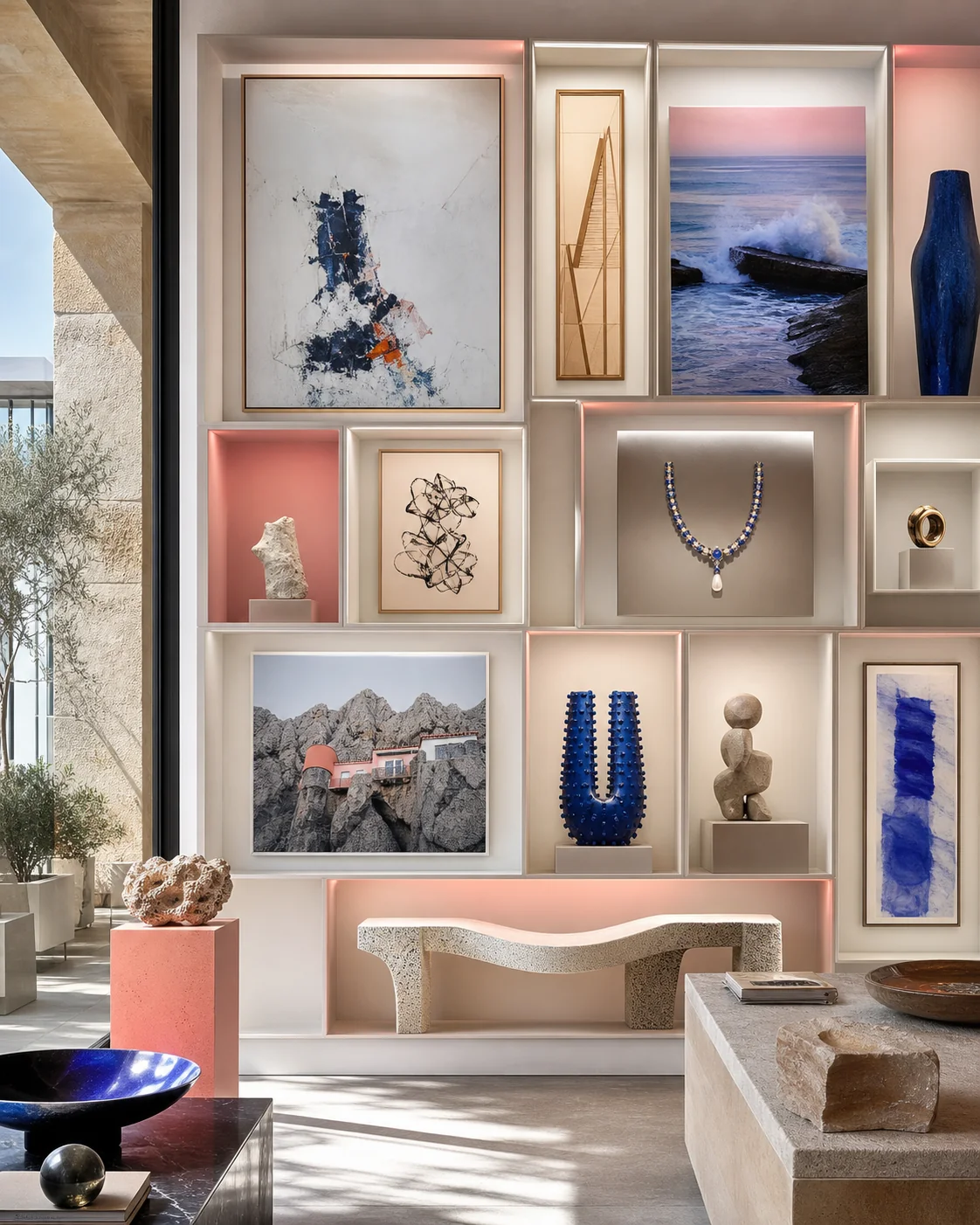
A market begins with a story
Help someone understand why the work matters.
Selling creative work online is not simply a matter of uploading an image and choosing a price. A buyer cannot stand beside the piece, feel its weight or ask a gallery assistant what makes it important. Your listing has to carry that experience.
The strongest presentation combines emotion with evidence: the idea behind the work, the hand or studio that made it, and the practical details that let a buyer make a confident decision. This applies to a painting, photograph or sculpture just as much as it does to artist jewellery or collectible design.
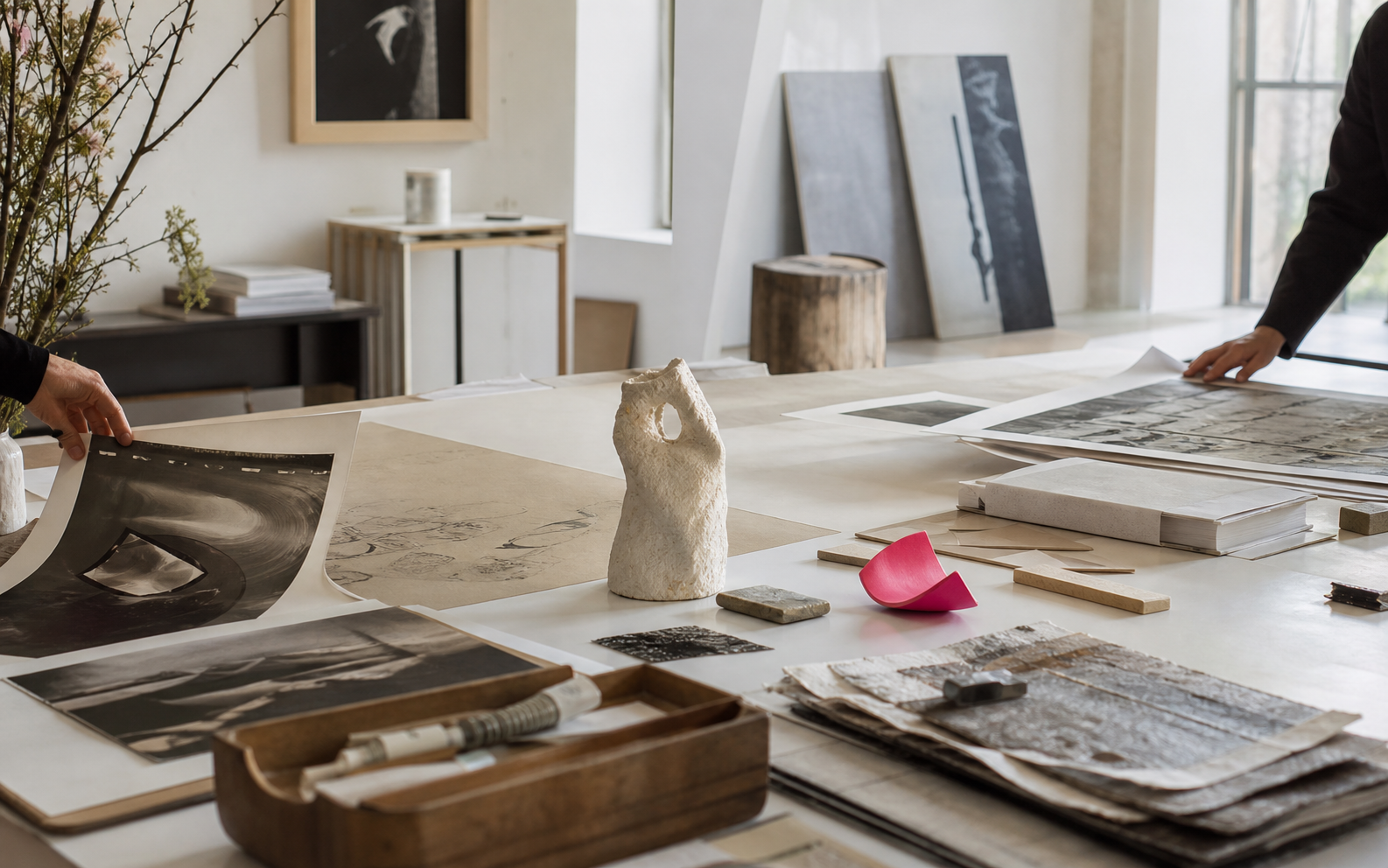
Before the first sale
Five foundations of selling creative work online
Know what you are offering
Describe whether a piece is original, editioned, made to order or part of a wider collection. Buyers need clear authorship, materials, dimensions, condition and availability.
Price with purpose
Consider materials, time, scale, rarity, edition size, previous sales and the market around your work. Leave room for selling costs, packaging, insurance and delivery.
Build trust through detail
Strong images, an honest description, a useful biography and transparent policies reduce uncertainty. Galleries and retailers should also identify the represented artist, designer or brand.
Plan fulfilment before listing
Know how the work will be packed, who can carry it, what it weighs and where you can ship. Jewellery, sculpture, framed work and fragile design objects each need different handling.
Keep the relationship professional
Answer questions accurately, document condition, communicate dispatch and retain shipment records. A thoughtful experience can turn a first purchase into a long-term collector relationship.
Different work, different details
What buyers need from each kind of seller
Artists and makers
Present a coherent body of work, explain your materials and process, and help buyers understand what makes each piece distinct.
Galleries and art dealers
Show provenance, representation and condition clearly while giving each artist and work enough context to stand on its own.
Jewellery artists and brands
State materials, dimensions, sizing, weight, hallmarks, production method and care requirements with precision.
Designers and specialist retailers
Explain function, materials, manufacture, age or edition information, condition and delivery requirements for collectible objects.
Where Artlimes is different
A global marketplace shaped by creative expertise
A point of view, not a general catalogue
Artlimes is for original art, editions, jewellery and collectible design with a clear creative or specialist identity. A coherent selection helps buyers understand what you make, represent or choose.
Independent work for an international audience
Your location is part of your story, not a limit on discovery. Explain the work so that a buyer in another country can understand its materials, scale, authorship, value and delivery requirements.
Professional context around every object
Artists, galleries, makers, brands and specialist retailers bring different expertise. Accurate attribution, condition, provenance, edition and product information makes that expertise visible online.

Consistency creates confidence
Your catalogue is part exhibition, part evidence.
Think about the sequence in which people encounter your work. A recognisable point of view helps, but consistency does not mean every object must look alike. It means titles, measurements, photography, descriptions and policies follow a dependable standard.
Write for an interested person who has never met you. Avoid unsupported claims and explain specialist language. When a detail is unknown, say so. Accuracy builds more confidence than exaggeration, especially for provenance, materials, age, editions and condition.

Common questions
What sellers should know
What information should an art listing include?
Include a precise title, creator, date, medium, materials, dimensions, condition, framing or display details, signature, edition information and certificate or provenance details where relevant.
How should I price art or collectible design?
Start with direct costs and the value of your time, then consider scale, rarity, career history, comparable work and demand. Use a consistent method and account for commission, taxes, packing and delivery before publishing a price.
Do I need professional photographs?
You need accurate, well-lit photographs that show colour, texture, scale and condition. Include the complete object, useful details and, where appropriate, a contextual image that helps a buyer understand size.
Can galleries and retailers sell online?
Yes. Galleries, art dealers, jewellery brands, designers and specialist retailers can sell online when they have the authority to offer the work and can provide accurate creator, ownership and product information.
How do certificates and editions work?
For editioned work, state the total edition size, the number offered, the production method and who signs or issues the certificate. Never describe an open edition as limited.
How should valuable or fragile work be shipped?
Choose packaging and a carrier for the object rather than for convenience alone. Protect surfaces and corners, prevent movement, document the packed condition, insure appropriately and use tracking whenever possible.
