
This site requires JavaScript. Please enable it in your browser settings.
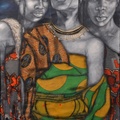
Set It Off by Nneka Osueke | Paintings | Artlimes
SALEAWAY with 10% OFF on your first order· Find something beautiful! Use CodeSALEAWAY
Deliver to
Netherlands
Set It OffView in RoomView in RoomView in RoomView in Room

Set It Off

Nneka Osueke

Original Painting140 x 155 x 1 cm

Oil paint, glass and plastic beads, and fabric on canvas

Ships from Thailand · Delivery £517.36
 10% off with code SALEAWAY.
£480.41
Signed by Artist
Certificate of Authenticity
14-Day Return GuaranteeRequest a return within 14 days of delivery. Items must be returned in their original condition.View our return guarantee
Secure Payments with Stripe. Learn more
Nneka OsuekeOffered by
Nneka Osueke
Thailand
1,313

Artist

About Nneka Osueke

I have this incessant need to tell the world the Truth about Africans and the diaspora.
As a West-African woman born and raised in America, I experienced an identity crisis early on in life: I was torn between being both Black American and Nigerian. These groups, vastly different in culture in many ways and so misunderstood of each other, tugged at me on both ends. Worn out from this push and pull, I went searching, and in the most beautiful, eye-opening ways, I found the history everybody had missed out on. I found out there wasn't much separation between my bloodline and my birthplace.

My work is rooted in the visual depictions of Ancient African spirituality before colonialism and Christianity. Using 24 karat Gold, age-old African practices with glass beading, and communication through fabric and clothing, I consecrate the symbols of our spirituality that modern religion used to turn Black people against ourselves. It's important to me that Africa and its closest descendants are finally credited for their immense impact on the global unconscious mind and spirit. After all, she birthed humanity.

Artwork

About this Artwork

“In November of 1929, thousands of Igbo women congregated at the Native Administration centers in Calabar and Owerri as well as smaller towns to protest both the warrant chiefs and the taxes on the market women. Using the traditional practice of censoring men through all night song and dance ridicule (often called “sitting on a man”), the women chanted and danced, and in some locations forced warrant chiefs to resign their positions. The women also attacked European-owned stores and Barclays Bank and broke into prisons and released prisoners. They also attacked Native Courts run by colonial officials, burning many of them to the ground. Colonial Police and troops were called in. They fired into the crowds that had gathered at Calabar and Owerri, killing more than 50 women and wounding over 50 others. During the two month “war” at least 25,000 Igbo women were involved in protests against British officials.

The Aba Women’s war prompted colonial authorities to drop their plans to impose a tax on the market women, and to curb the power of the warrant chiefs. The women’s uprising is seen as the first major challenge to British authority in Nigeria and West Africa during the colonial period.”
My great-grandmother, Regina (depicted by my cousin, Jennifer) was one of the thousands of women fighters in the two-month long Women’s War.
An independent maker connecting original work with global digital opportunities

New work. Fresh perspectives.

Join the new avant-garde.

Meet emerging creative voices, discover original work first and receive the best of Artlimes in your inbox.