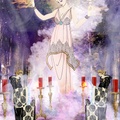
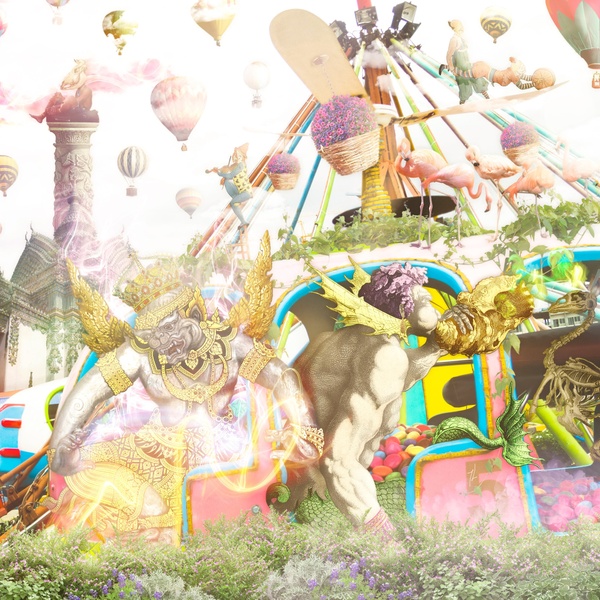
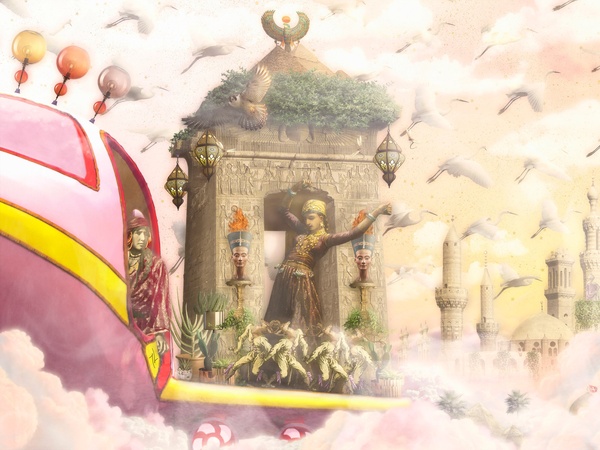
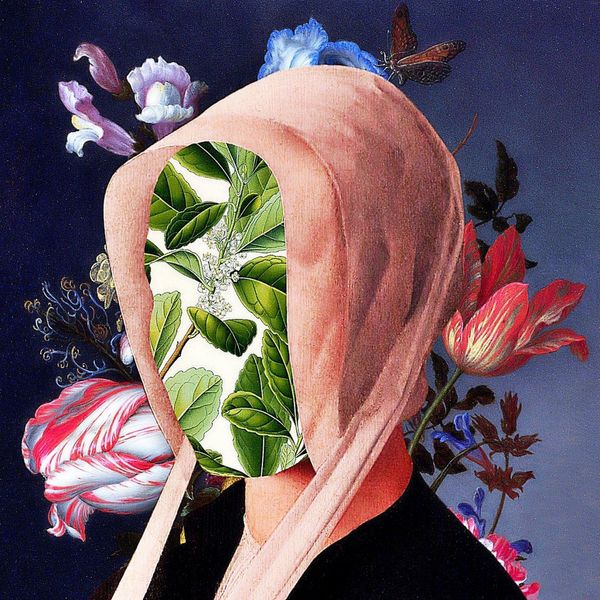
Aphromighty, my 50ft Wiccan, pulsates with the vibrant life force of Aphrodite, the enigmatic goddess of love and passion. She rises as a luminous titan, melding the colossal prowess of the Olympian deity with the misunderstood power of Wiccan magic. Her towering form is a nod to the monstrous feminine found in Attack of the 50 Foot Woman, alluding to the duality of female strength and societal fears.
Aphrodite, a canvas of unbridled womanhood, bears the weight of desire and love, both pure and conflicted. She defies binary limitations, transcending the madonna/whore complex and the nurse/witch dichotomy. Her universality is paramount, as she inspires both heterosexual and homosexual yearning, serving as the nexus of all erotic potential. She speaks to the rich, convoluted layers of femininity and desire.
—
Series Statement
In this series, the stereotypes women have been labelled with through history have now become their greatest strength. Drawing inspiration from 1920s Gazette du Bon Ton fashion plates, I infuse archaic witch tropes into the enigmatic narratives of six Greek goddesses and nymphs: Thea, Cassandra, Echo, Rhea, Circe, and Aphrodite.
By intertwining reductive motifs with the first generation of "liberated" women from the Gazette du Bon Ton, I’m playing with the foundations of freedom and subjugation. The Gazette, available only to the wealthy, represented a form of liberation that was tantalisingly out of reach for most women. Yet even the women who could afford the Gazette were vilified if they dared to express themselves too boldly, hitting a glass ceiling of judgement, or even scorn, if they stepped outside the bounds of ladylike behaviour. It is an ironic cudgel, seeing how boundless the strictures of ladylike behaviour have proven to be over the years. They have been endlessly adapted by men and women who fear independent spirits above all else.
The fashionable interplay between witchery, demonic possession, and female sexuality in this series is an invitation to reclaim all the sexist stereotypes… again, because they’re still hanging around — embedded in cultural artefacts and filigreed into social policing. This is why the starting point for the series was transcendence, with each goddess and nymph transcending the boundaries of heroism and villainy, because deities can’t be hemmed in. The implacable faces and artfully contorted bodies of the fashion plates continue to evoke the same tension between seeking agency and succumbing to the control of social norms, as well as the paradoxical nature of their newfound liberation as fashion plates: tailored to perfection but still saddled with the expectation of conformity — albeit couture. And so their stories play into the cyclical nature of oppression women have endured beneath all those tired stereotypes of witch, virgin, mother, whore…