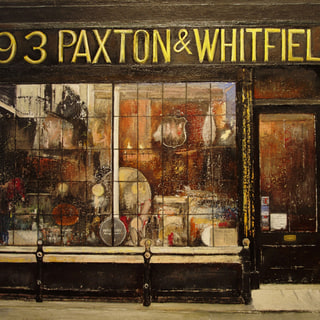
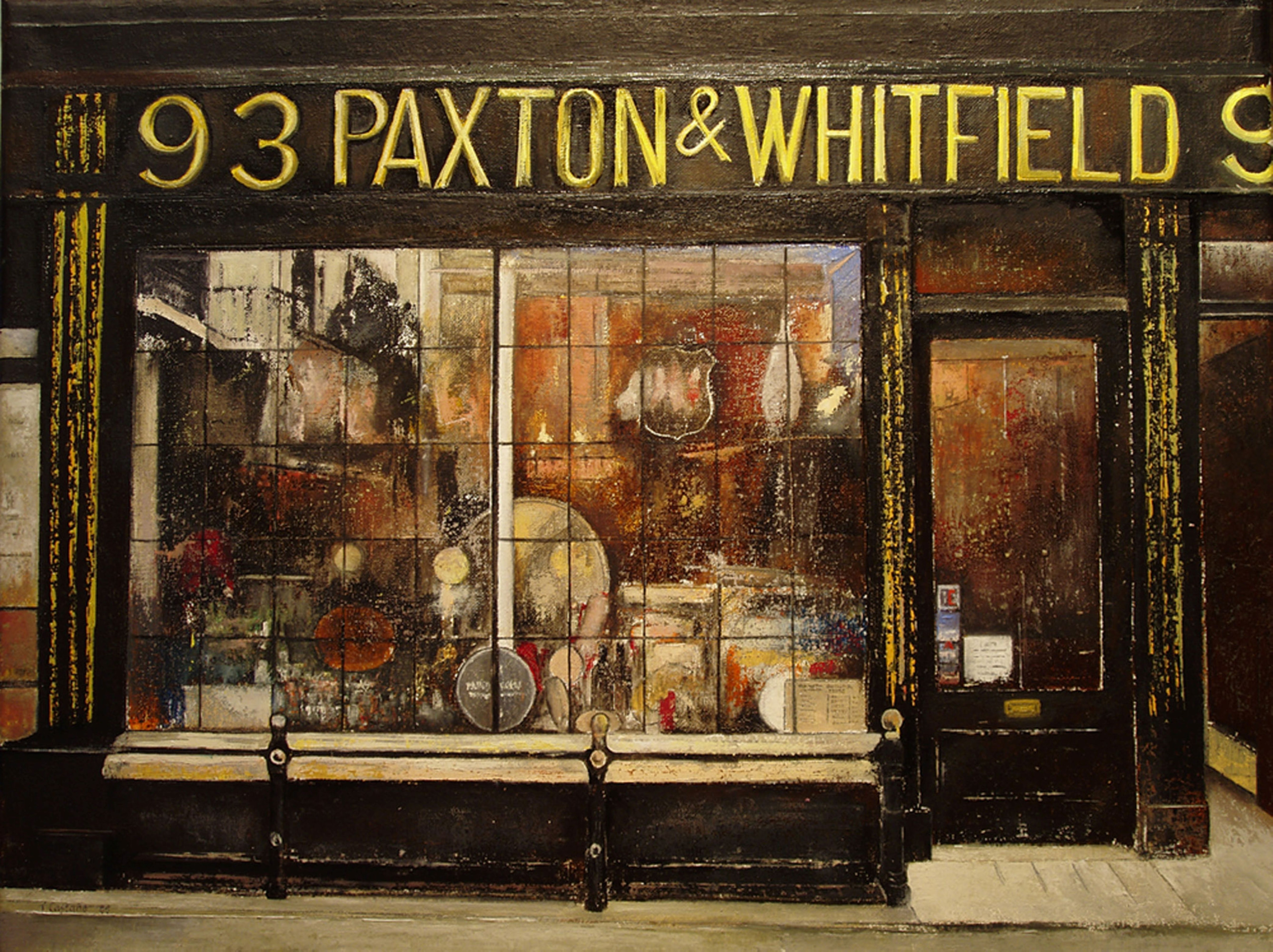
This painting depicts the façade of an old commercial establishment—identified by the sign "93 Paxton & Whitfield"—viewed head-on with a composition of great architectural precision. The scene conveys an atmosphere of calm and a touch of nostalgia, evoking the character of traditional shops in a historic city.
Several aspects stand out:
- The composition is symmetrically organised. The large shop window occupies the centre of the work and serves as the main focal point, while the door on the right visually balances the whole. The vertical and horizontal lines of the woodwork and windowpanes provide order and stability.
- The shop window acts as a portal into the establishment's interior. It displays various objects—plates, containers, utensils, and decorative items—rendered with enough detail to suggest their presence without meticulously describing them. Reflections on the glass blend the interior with the reflected street buildings, creating an intriguing layering of spaces.
- Light is one of the most compelling elements. The warm interior lighting contrasts with the understated exterior, which is dominated by blacks, ochres, and browns. This contrast draws the viewer's gaze toward the shop window and creates a sense of depth.
- The colour palette relies on earth tones, golds, blacks, and reddish hues. The gold lettering of the sign stands out against the dark background, lending the shop an elegant, distinguished air.
- The painting technique combines solid architectural draftsmanship with freer brushwork in the reflections and interior objects. This interplay between precision and suggestion avoids an overly photographic representation, giving the work a distinct painterly character.
- The meaning extends beyond the mere depiction of a shop. The painting speaks to the passage of time, urban memory, and the value of small businesses as part of a city's identity. The absence of human figures reinforces that sense of silence and contemplation, allowing the architecture and light to take centre stage.
Overall, the work stands out for its balance between architectural realism and atmospheric sensibility. Rather than merely documenting a building, it transforms an everyday façade into a scene steeped in history, inviting the viewer to imagine the life unfolding behind those windowpanes.